
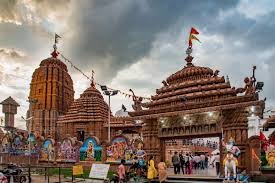
Visiting the Jagannath Temple in Puri is not just about seeing the deity—it’s about walking through centuries of tradition. I visited early in the morning around 6:30 AM, and here’s how the darshan unfolded step by step, based on my real experience.
1. Entry Through Singha Dwara (Lion’s Gate)
The temple has four gates, but the Lion’s Gate is the main entrance. When I reached, there was already a steady crowd, but the line was moving slowly. As soon as I entered, I noticed the idols of Lord Nrusingha and Patitapabana on one side, and Lord Ganesha and Hanuman on the other. It felt like they were silently blessing everyone who walked in.
2. Baisi Pahacha – The 22 Sacred Steps
Climbing these steps felt special. I paused briefly on the Yama Shila, but because of the crowd behind me, I couldn’t stay long. I looked up at the Neelachakra (blue wheel) on top of the temple and felt a sense of calm. Many people were stopping here for a moment before moving ahead.
3. Kurma Beda – Inner Circle of Shrines
Inside, there are many smaller shrines. I slowly moved around, but due to the crowd, I couldn’t spend much time at each one. I offered prayers to Mahalakshmi, Surya, Navagraha, Saraswati, and Nilamadhava. Each shrine has its own importance, and together they make the temple feel like a complete spiritual space.
4. Natamandapa – The Dance Hall
This hall once hosted cultural performances. Before moving ahead, many devotees were embracing the Garuda Khambha (pillar of Garuda). I also followed the same ritual and then moved forward toward the main sanctum. At this point, the crowd became denser, and movement was slower.
5. Darshan of Lord Jagannath
After waiting in the queue for around 35–40 minutes, I finally reached the sanctum. There stood Lord Jagannath, Balabhadra, and Subhadra, with their large, expressive eyes. The darshan lasted only a few seconds because of the crowd, but it felt powerful and memorable.
6. Jagamohana & Exit
After darshan, I moved through the Jagamohana (assembly hall). The flow of people was continuous, so there was no place to stop. I briefly noticed the gatekeepers Jaya and Vijaya before exiting through Beharana Dwara.
7. Ananda Bazar – Mahaprasad
No visit feels complete without tasting the Mahaprasad. At Ananda Bazar, I bought a simple meal for around ₹100–₹150. Devotees were sitting together on the floor and eating, without any distinction. It felt simple, traditional, and very different from normal dining.
⏰ Daily Schedule (Simplified)
- Early Morning (5–8 AM): Peaceful darshan, Mangala Aarti
- Midday (9–1 PM): Bhoga rituals, darshan resumes
- Afternoon (1–4 PM): Temple closed for cleaning
- Evening (4–8 PM): Sandhya Aarti, darshan
- Night (9–11 PM): Final darshan with Badasinghara Bhoga
🙏 Tips for Devotees
- Try to visit early morning (before 7 AM) or evening for relatively less crowd
- Expect waiting time of 30–60 minutes during normal days
- Dress modestly and follow temple rules strictly
- Avoid unnecessary discussions with pandas if you are not interested in paid rituals
- Non-Hindus can’t enter, but they can view the temple from nearby rooftops like Raghunandan Library
- During festivals like Rath Yatra, the crowd becomes extremely high and the process changes completely
🌟 Final Feeling
Walking out of the temple, I felt calm and satisfied. The darshan is not just about seeing Lord Jagannath—it’s about moving through each step, each crowd, and each moment inside the temple. Even though the visit was short, the experience stayed with me.
Visiting the Jagannath Temple in Puri is not just about seeing the deity, it’s about walking through centuries of tradition. Here’s how the darshan unfolds, step by step, just as I experienced it.