
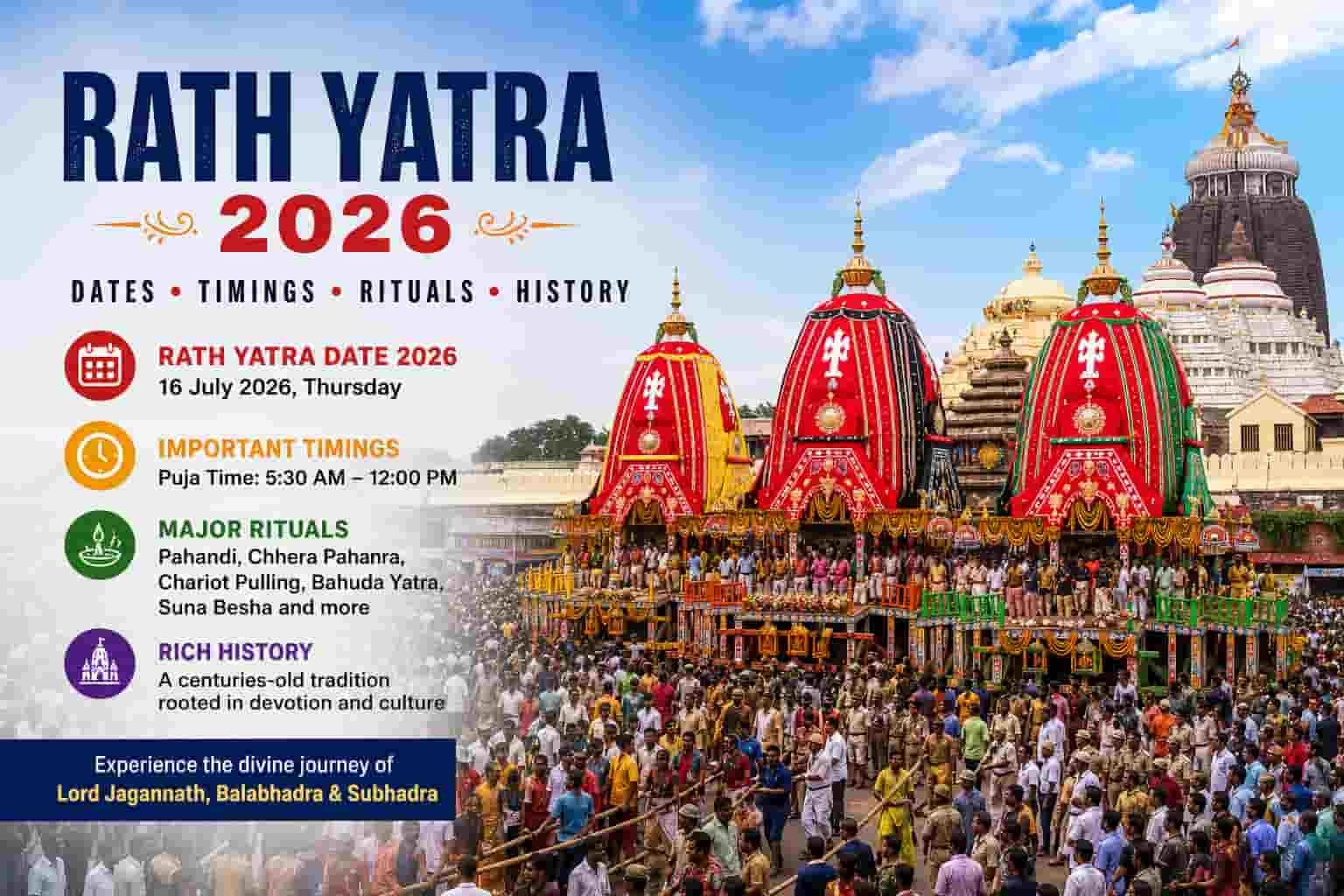
The Rath Yatra 2026 in Puri is one of the biggest and most sacred festivals in India. Every year, millions of devotees visit Puri to witness Lord Jagannath’s grand chariot procession.
If you are planning to visit or write about it, this guide will help you understand everything — date, timings, rituals, and history.
📅 Rath Yatra 2026 Date
- Main Rath Yatra: 16 July 2026 (Thursday)
- Bahuda Yatra (Return Journey): Around 24 July 2026
- Festival Duration: ~9 days
The festival is celebrated on the Dwitiya Tithi (2nd day) of Shukla Paksha in Ashadha month, according to the Hindu calendar.
⏰ Rath Yatra 2026 Timings (Important Muhurat)
- Dwitiya Tithi Begins: 15 July 2026 – 11:50 AM
- Dwitiya Tithi Ends: 16 July 2026 – 08:52 AM
- Auspicious Puja Time: Early morning to noon (~5:30 AM – 12 PM)
👉 The main rituals like Pahandi, Chhera Pahanra, and chariot pulling usually happen during the daytime.
🛕 What is Rath Yatra?
Rath Yatra means “Festival of Chariots.” It is the day when:
- Lord Jagannath
- Lord Balabhadra
- Devi Subhadra
come out of the Jagannath Temple and travel to the Gundicha Temple in grand chariots.
This journey symbolizes:
- Lord coming out to bless all devotees
- Equality (everyone can see the Lord)
- Devotion and unity
🪔 Important Rituals of Rath Yatra
Here are the key rituals you must know:
1. Snana Purnima
The deities are bathed with 108 pots of water before the festival begins.
2. Anavasara Period
After bathing, the deities fall “ill” and remain hidden for around 15 days.
3. Gundicha Marjana
Cleaning of Gundicha Temple before the arrival of Lord Jagannath.
4. Pahandi Bije
The deities are brought out of the temple in a grand ceremonial procession.
5. Chhera Pahanra
The King of Puri sweeps the chariots with a golden broom, showing humility. (Wikipedia)
6. Chariot Pulling (Main Event)
Devotees pull the giant chariots on the Bada Danda (Grand Road).
7. Hera Panchami
Goddess Lakshmi symbolically visits Gundicha Temple.
8. Bahuda Yatra
Return journey of the deities to Jagannath Temple.
9. Suna Besha
Lord Jagannath is decorated with gold ornaments.
10. Niladri Bijay
Final return of the deities to the temple.
🚩 The Three Chariots
Each deity has a separate chariot:
- Nandighosa – Lord Jagannath
- Taladhwaja – Lord Balabhadra
- Darpadalana – Devi Subhadra
These chariots are newly built every year using wood and traditional techniques.
📜 History of Rath Yatra
Rath Yatra has been celebrated for centuries in Puri, Odisha.
- It is associated with ancient Jagannath traditions
- The chariots symbolize the movement of the divine into the world
- The English word “juggernaut” comes from this festival (Wikipedia)
The festival reflects:
- Equality (everyone can pull the chariot)
- Devotion beyond caste or status
- Public darshan of the Lord
🙏 Spiritual Significance
Rath Yatra is not just a festival — it is a deep spiritual experience:
- Pulling the chariot is believed to remove sins
- Seeing the Lord during Yatra brings blessings
- It represents the journey of life and devotion
🧳 Travel Tips for Puri Rath Yatra 2026
If you plan to visit:
- Book hotels 3–6 months in advance
- Reach Puri at least 1–2 days before
- Stay hydrated (July is humid)
- Follow crowd safety guidelines
- Avoid peak rush areas if traveling with family
✨ Why You Should Attend Rath Yatra
- Experience one of the world’s largest religious festivals
- Witness unique traditions not seen anywhere else
- Feel the spiritual energy of millions of devotees
- Be part of a once-in-a-lifetime event
📌 Final Words
Rath Yatra 2026 is a powerful blend of devotion, tradition, and culture. Whether you are a devotee or a traveler, this festival offers a truly unforgettable experience.